Highland Park, TX
Water Filtration in Highland Park, Fitted to What Your Water Test Shows
We test your water, explain the results in plain terms, then install whole-house carbon filtration, under-sink reverse osmosis, iron and sediment filters or a softener only if the numbers call for it. The same two or three people handle your job in Highland Park, University Park and nearby Dallas from start to finish.
- Test before we recommend
- Same crew start to finish
- Written line-item estimates
- Cleanup before we leave
Where We Work
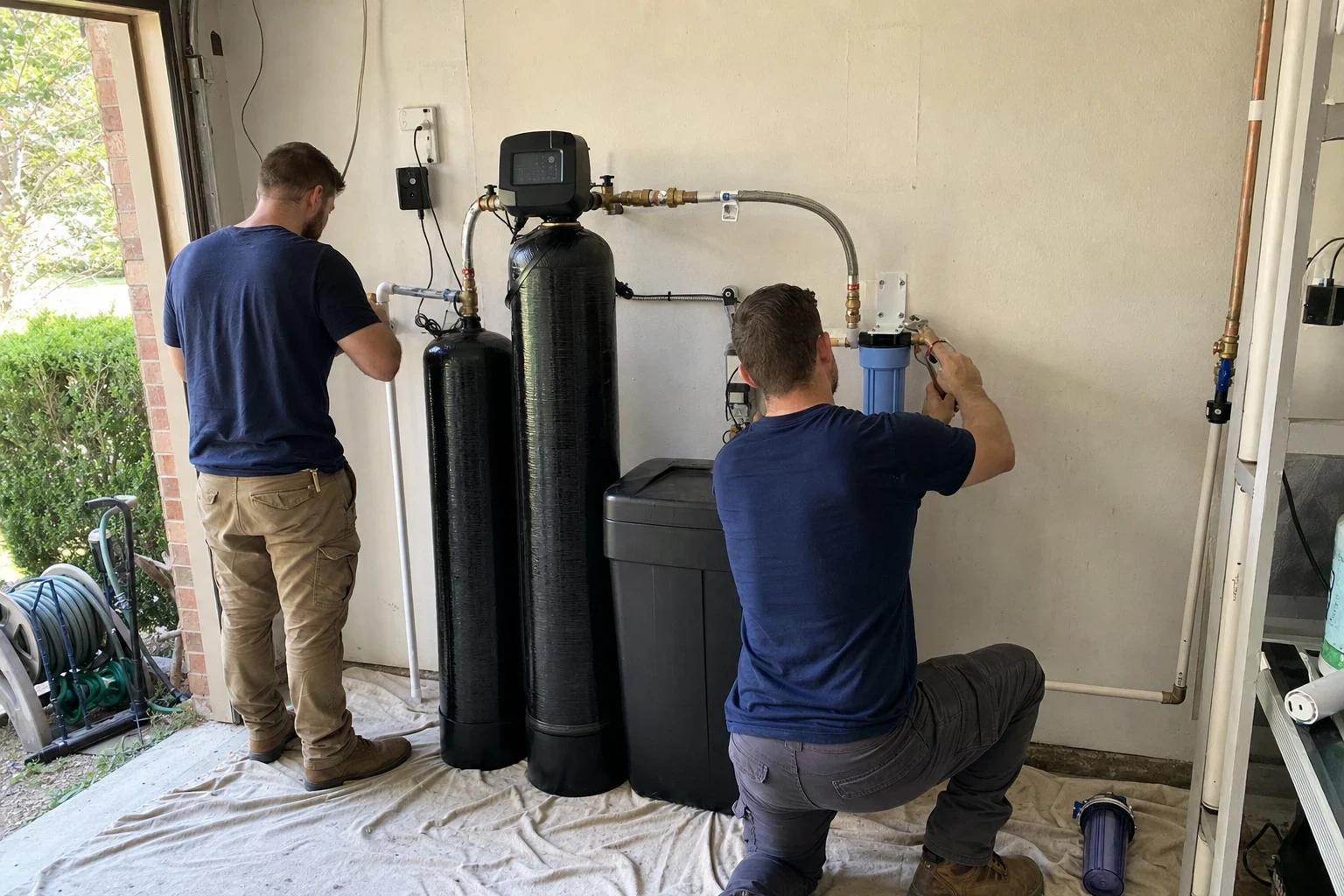
We serve homeowners in Highland Park and University Park, and we regularly work in Dallas, Irving, Farmers Branch, Addison and Cockrell Hill. Our crew also takes jobs in Garland, Mesquite, Carrollton and Richardson.
- Highland Park
- University Park
- Dallas
- Irving
- Farmers Branch
- Addison
- Cockrell Hill
- Garland
- Mesquite
- Carrollton
- Richardson
If your home is near any of these and you are not sure we cover it, ask when you call and we will tell you straight.
Filtration Services for Your Home
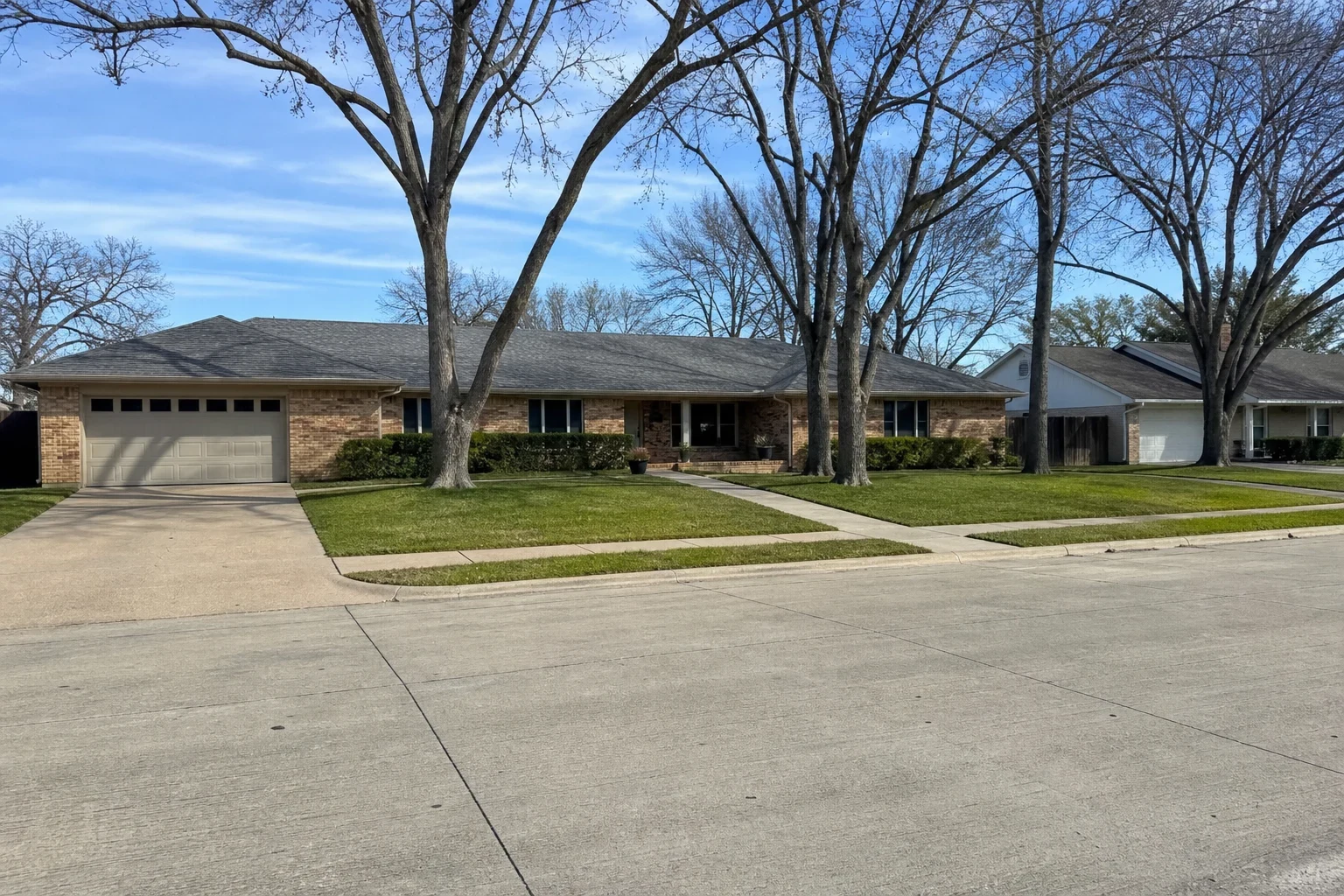
Nearly every job begins with water testing, since what's in your pipes decides which equipment makes sense. After that, we fit whole-house carbon filtration for disinfectant taste and smell, under-sink reverse osmosis for the water you drink and cook with, and iron and sediment filtration when stains or grit appear. A softener only follows a hardness test. After installation, our filter replacement and maintenance service keeps the cartridges and media doing their job.
Water testing
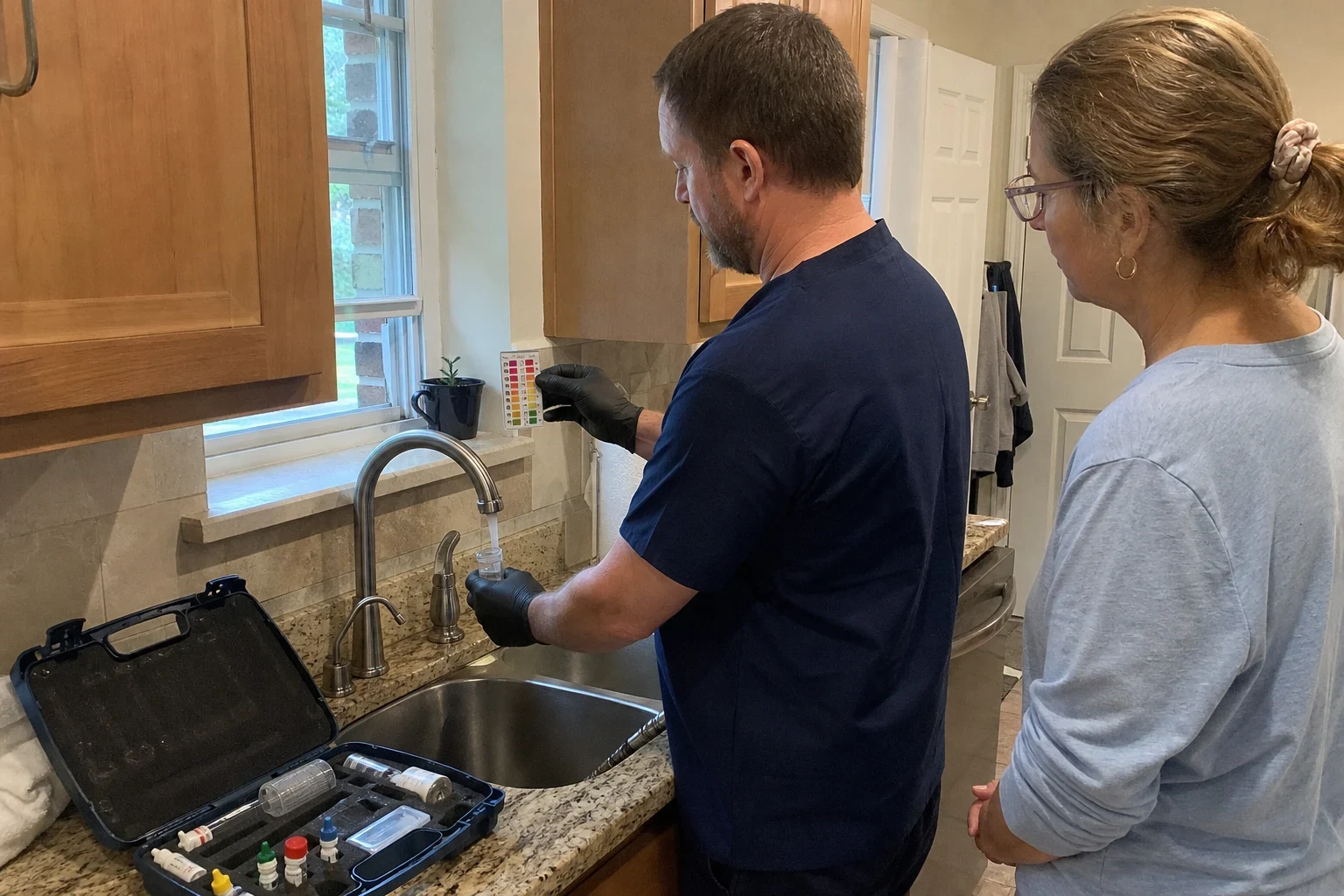
Field and lab testing for hardness, chlorine, iron, pH, lead and bacteria, so any filter you buy is matched to a measured problem.
Filter replacement and maintenance
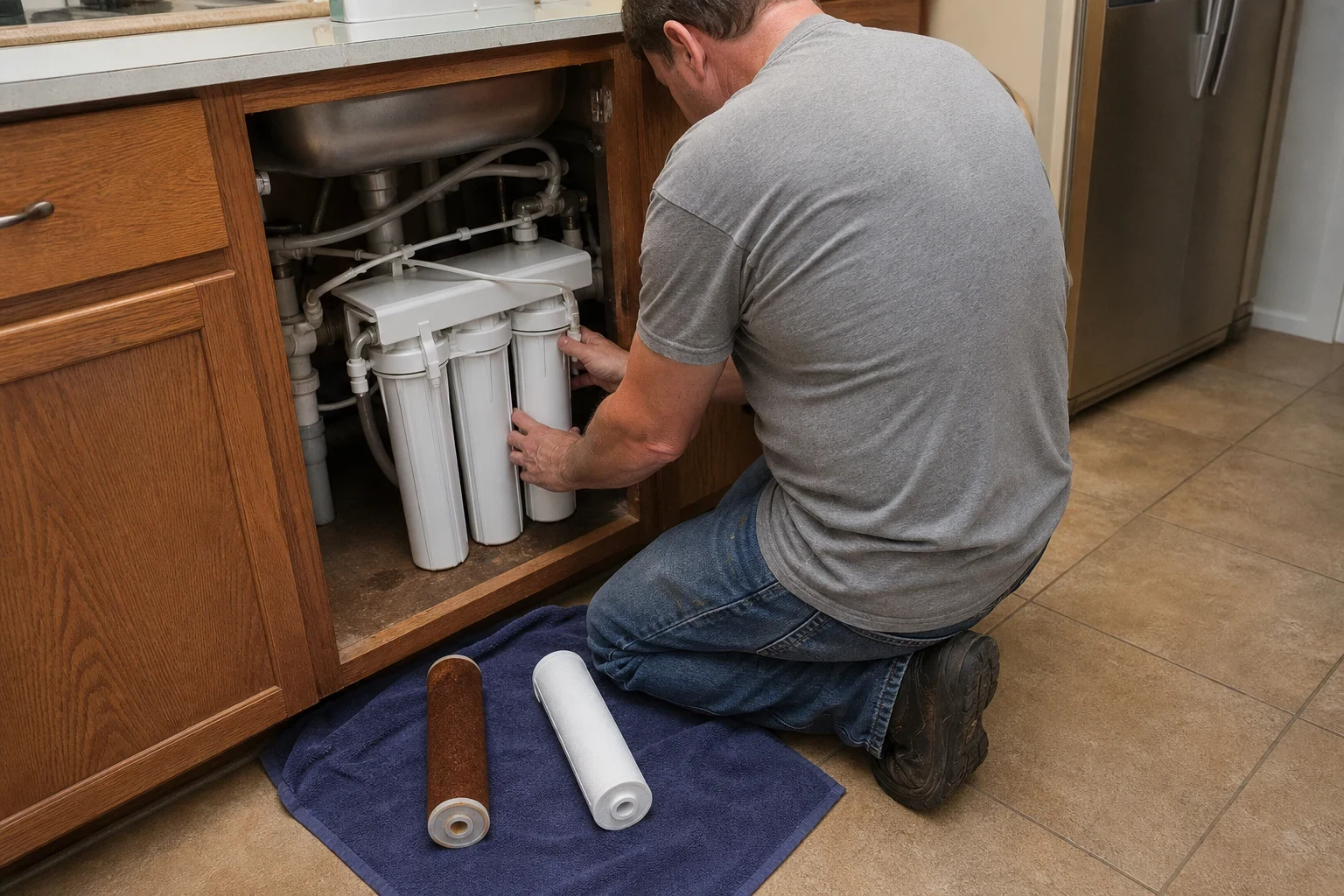
Scheduled cartridge, membrane and media changes for the filtration systems in your home, with pressure and output checks so you know each system is still doing its job.
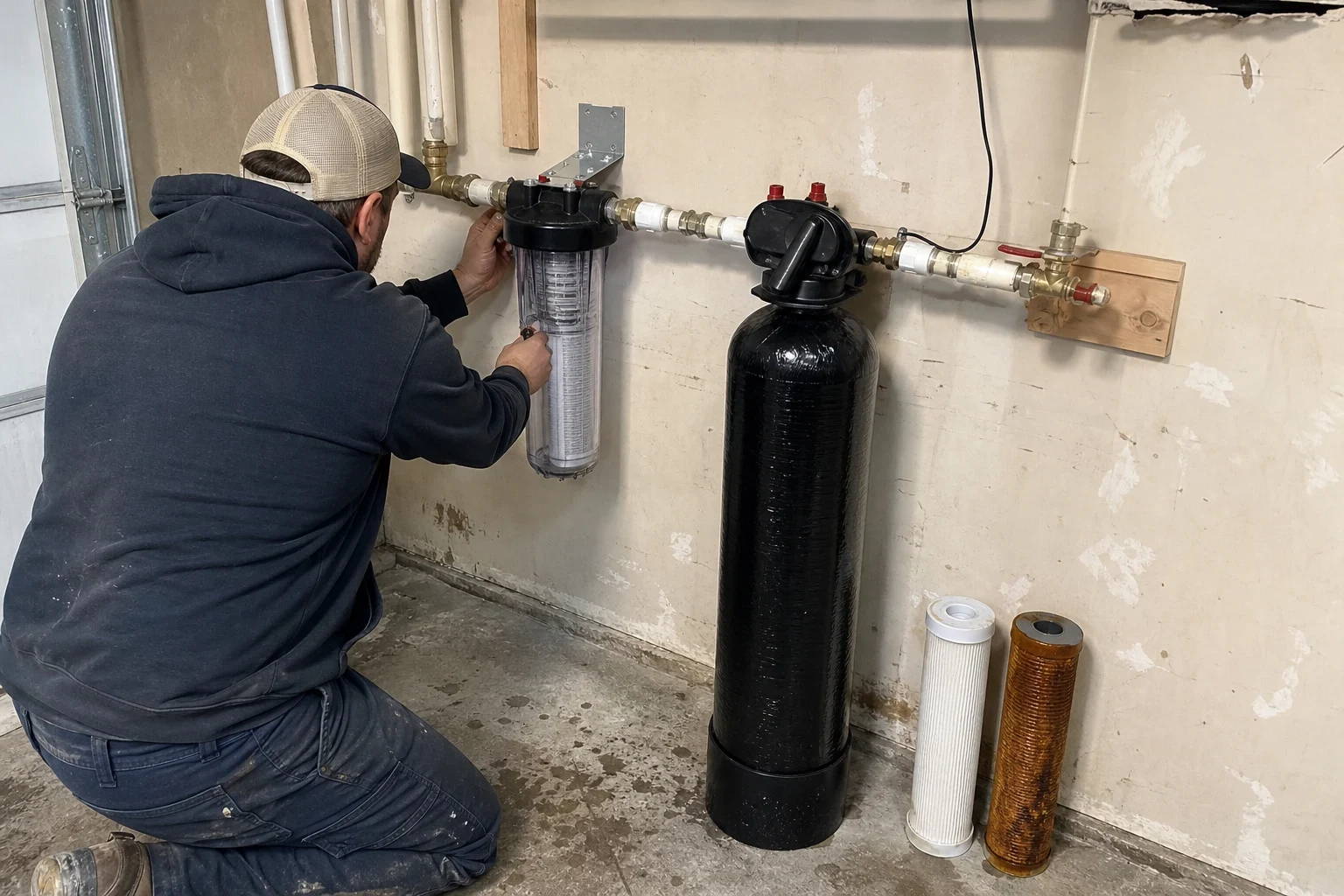
Iron and sediment filtration
Sediment and iron filters sized to your water test and your main line, so grit and orange staining stop at the point of entry instead of reaching your fixtures.
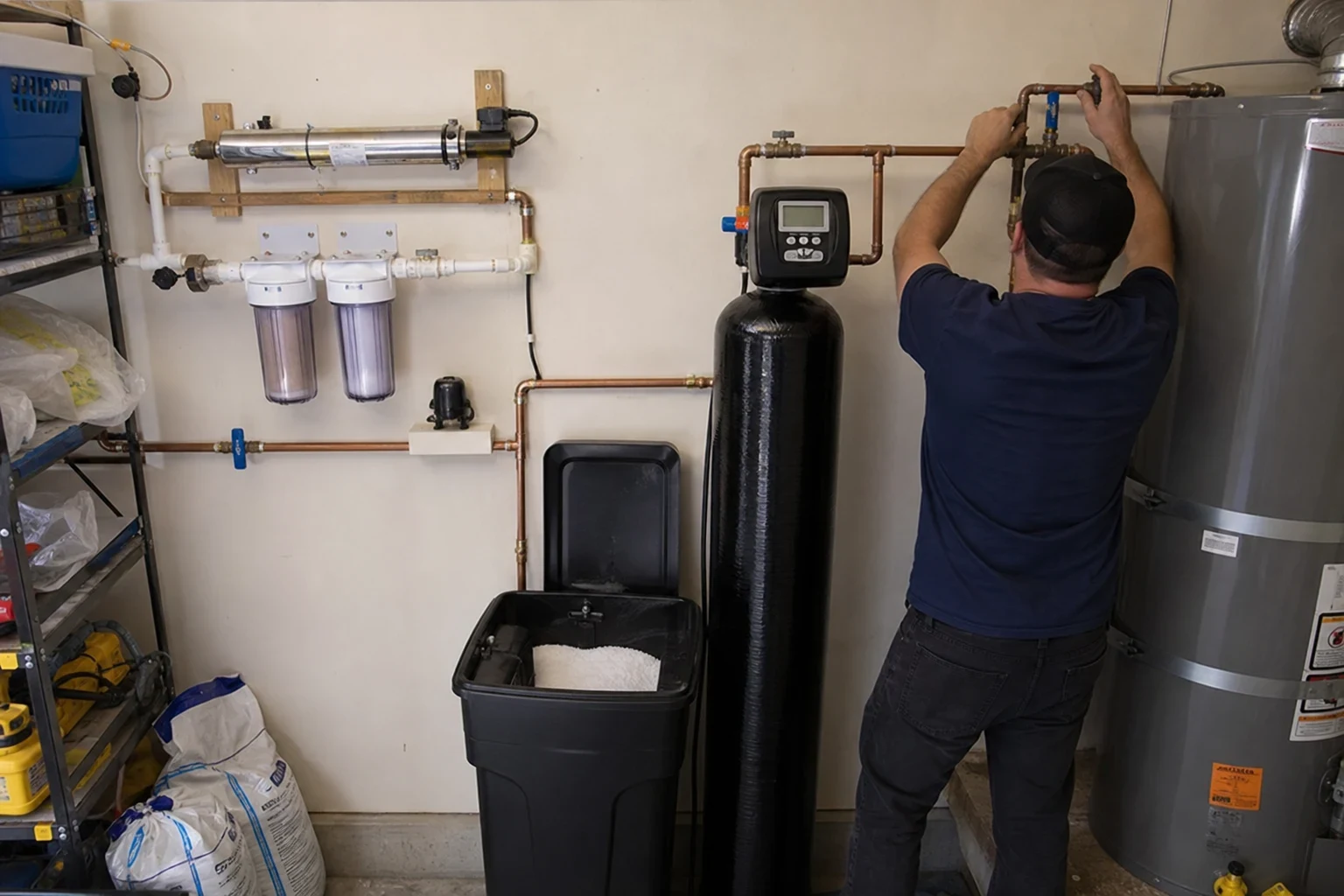
Water softeners
We measure your water's hardness first, then size and install a metered softener only when the number shows it will actually help your home.
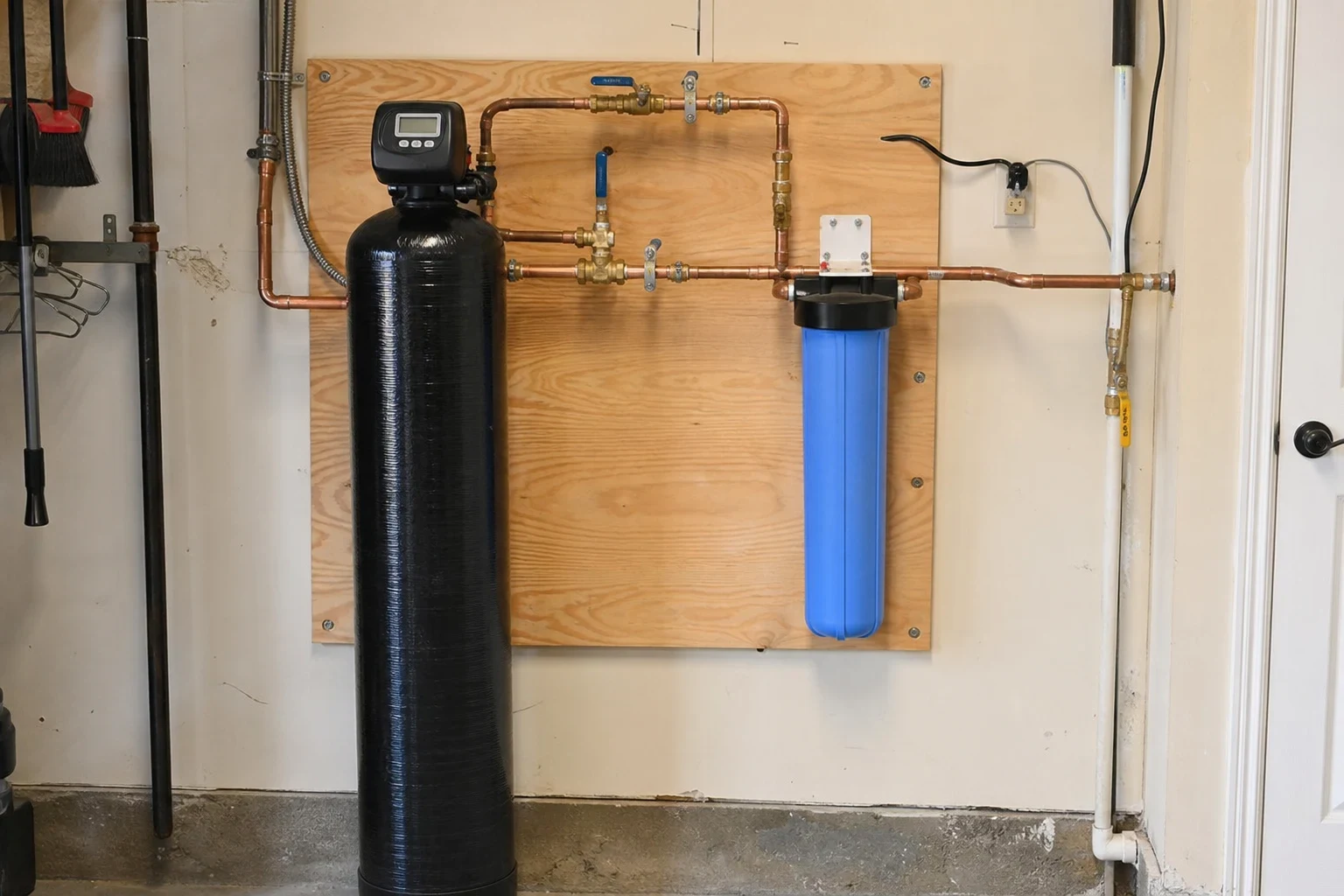
Whole-house carbon filtration
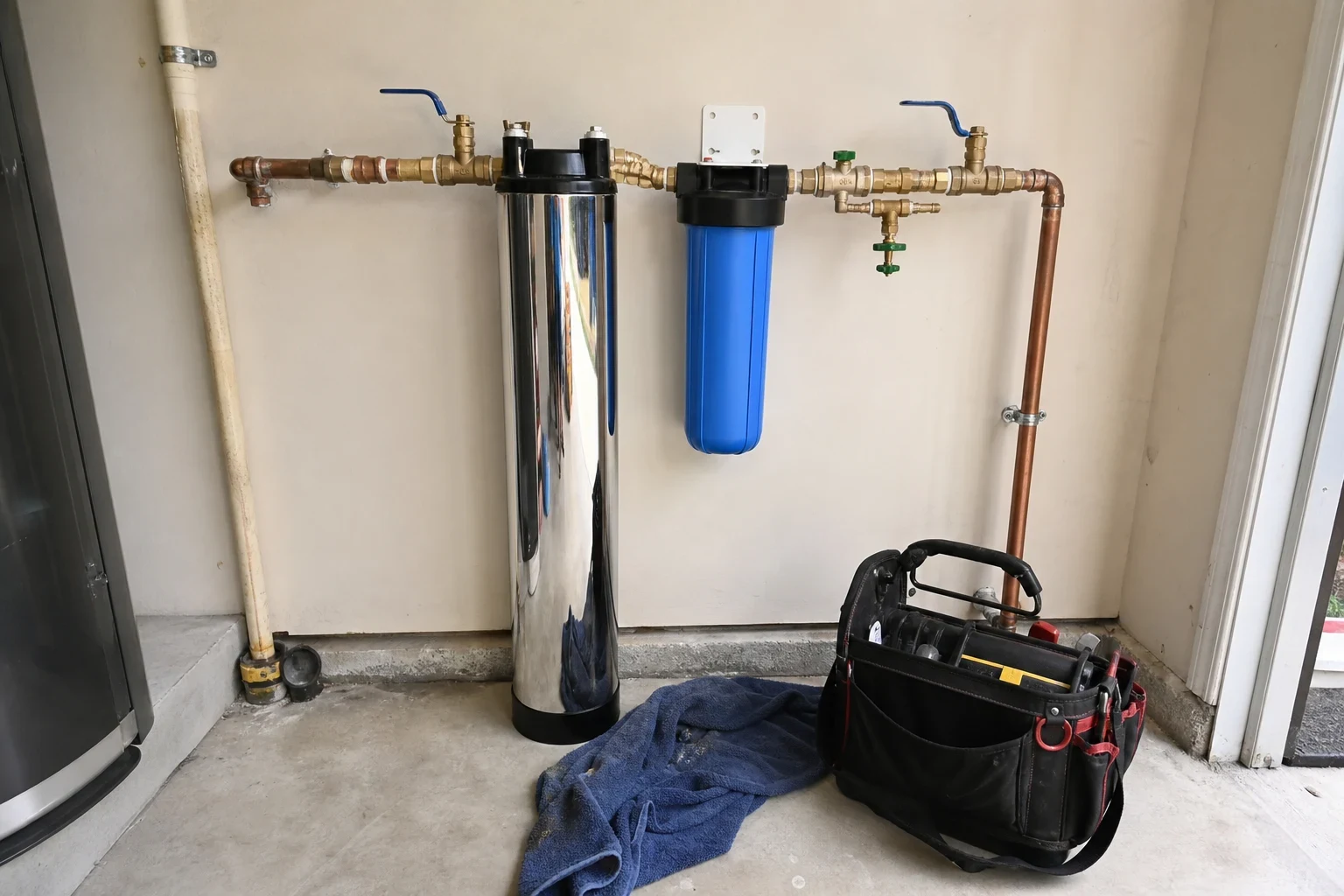
A carbon system on your main water line that takes out chlorine taste and smell for showers, sinks and appliances, sized from a water test and your home's flow.
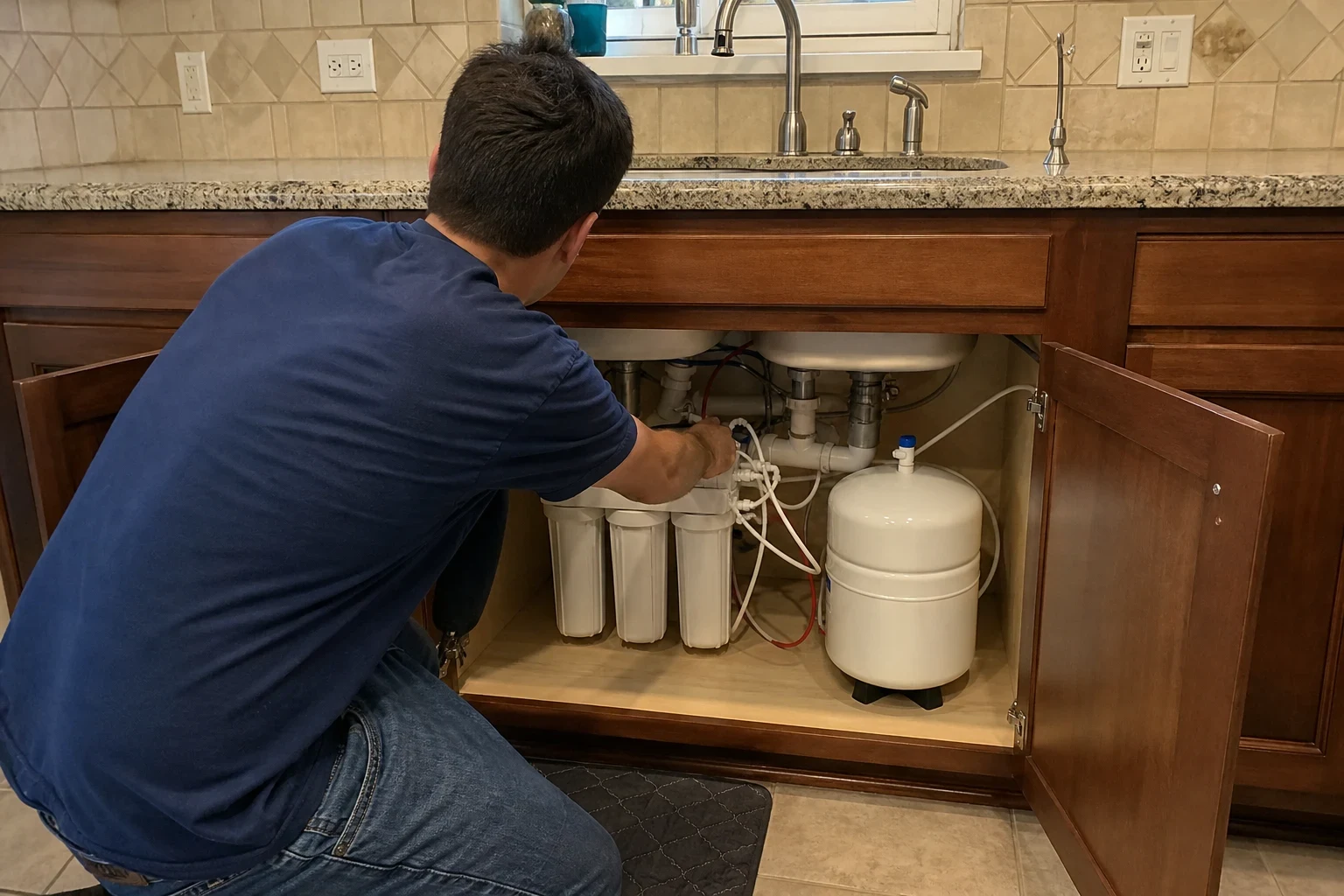
Under-sink reverse osmosis
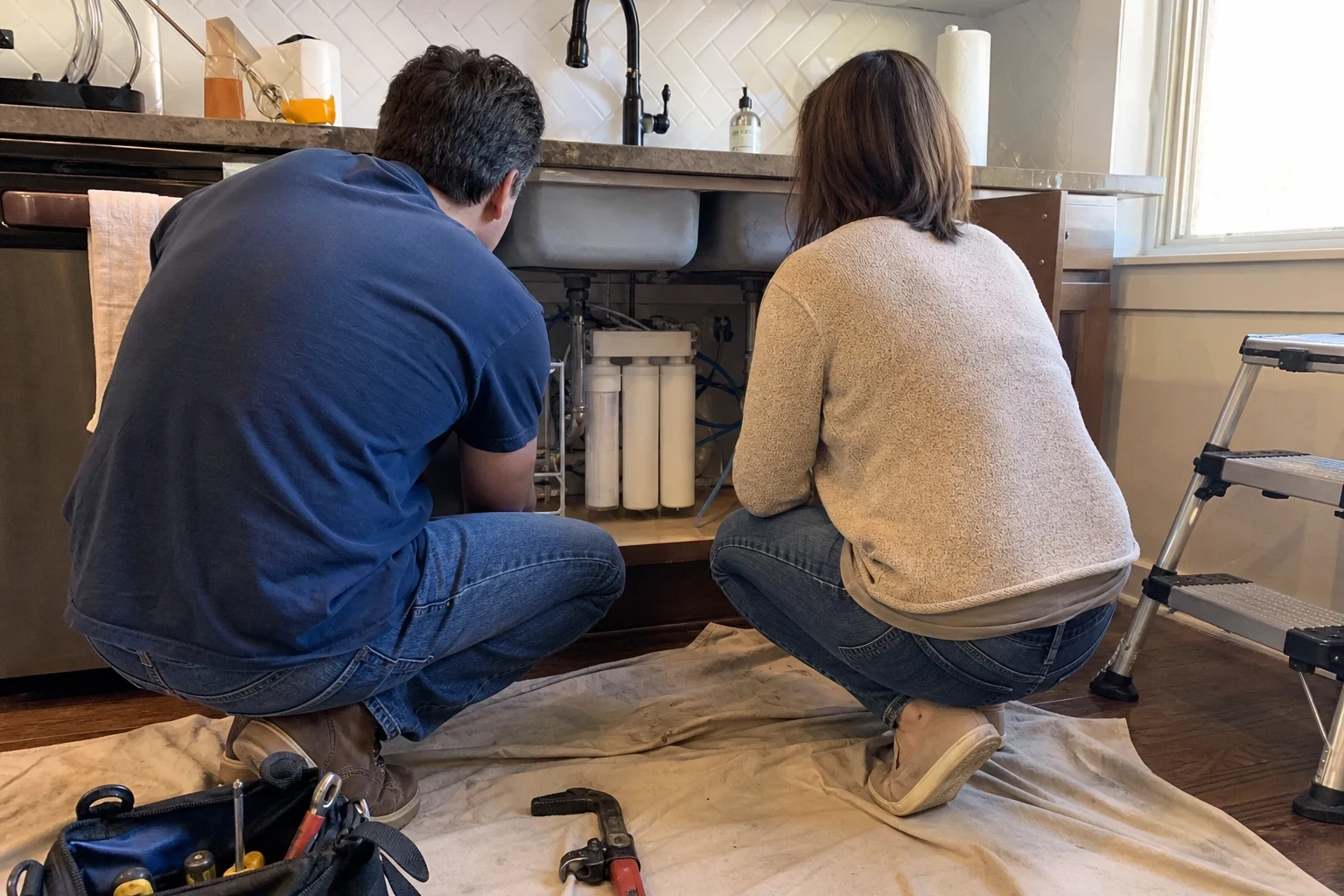
A compact RO system under your kitchen sink that strips dissolved solids, lead and chlorine taste from the water you drink and cook with.
Why a Small Crew Does Better Filtration Work
Filtration problems usually come down to details: a cartridge seated wrong, a bypass valve left half open, a drain line with no air gap. Keeping the same people on your job means nothing gets lost between the test and the install.
The person who tests also installs
The technician who reads your test results is the one who sizes and plumbs the system. You do not explain your water twice, and the reasons behind each part stay with the job.
Equipment sized to your results
Carbon bed depth, flow rate in gallons per minute and RO membrane capacity are chosen from your numbers and your household's use. An undersized carbon tank lets disinfectant slip through at peak flow, so we size for the shower and the washer running together. We are NSF certified.
No softener unless hardness supports it
A softener adds salt, a brine tank and a drain connection to your home. If your hardness test does not justify that, we tell you and recommend a lighter option or nothing at all.
Clean, careful work inside your home
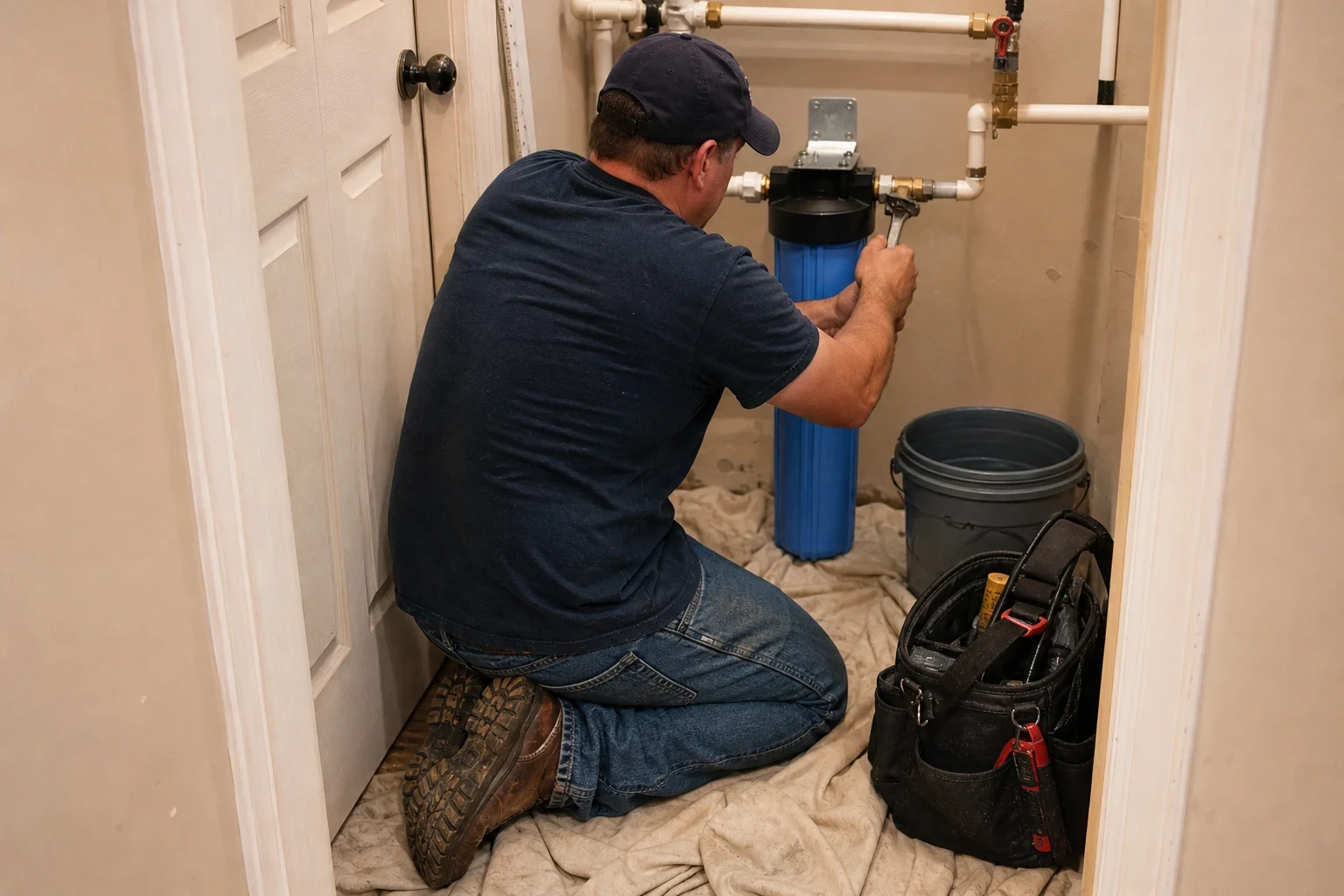
We lay drop cloths at the main line, cap open pipe ends while we work and flush new media to a drain before the system goes live. When we leave, the floor looks the way we found it.
Straight answers on upkeep
Every system needs cartridges or media changed. We tell you the schedule and the parts up front, so maintenance is not a surprise a year later.
A Shop That Keeps Its Jobs Close
We are a family-owned, BBB accredited water filtration company that works inside homes across Highland Park and the surrounding area, rated 4.9 stars from 325 Google reviews. We keep our crew small on purpose, so the person you meet at the test is the person who comes back to install and the person you talk to when a filter is due.
Our approach is simple: measure first, then recommend. Plenty of city water already meets drinking standards, and many concerns come down to disinfectant taste or what older pipes inside the house add along the way. We would rather fit a correctly sized carbon system or a single reverse osmosis unit under the kitchen sink than sell equipment your water does not need.
What Sets the Price of a Filtration System
No two homes need the same setup, so we price each job from your test results and a look at your plumbing. These are the things that move the number most.
We give you a written, line-item estimate after testing and looking at your plumbing, so you can see what each part and hour of labor is for before you decide.
- What the test finds
- Taste and odor from disinfectant calls for carbon. Lead from older solder or fixtures points to reverse osmosis at the tap. Iron, sediment or high hardness each add their own equipment.
- Type of disinfectant
- Water treated with chloramine needs catalytic carbon and more contact time than water treated with chlorine alone. That changes media type and tank size.
- System size and flow
- A larger home with more bathrooms needs a bigger carbon tank or higher-flow housings to keep pressure steady.
- Access to the main line
- Where your water line enters, how much room there is and whether the pipe is copper, PEX or older galvanized steel all affect labor and fittings.
- Drain and power needs
- Softeners, backwashing filters and RO systems need a nearby drain, and some need an outlet. Running new lines adds time.
Common Questions About Home Water Filtration
Why does my tap water taste or smell like a swimming pool?
That is the disinfectant your utility adds to keep water safe in the pipes. It is not a sign the water is unsafe, but many people dislike the taste. A whole-house carbon filter removes it at every tap, and if your water uses chloramine we use catalytic carbon, which handles it far better than standard carbon.
Could my plumbing be adding lead to my water?
It can happen in older homes. Copper pipe joined with lead solder before the federal ban in 1986, older brass fixtures and some service lines can leach lead, especially when water sits overnight. A lab test of first-draw water answers the question, and an under-sink reverse osmosis system is a reliable way to reduce lead at the kitchen tap.
Do I need a water softener?
Only if a hardness test shows it is worth it. A softener means a brine tank, salt refills and a drain line, so we measure your hardness in grains per gallon first. If the result is modest, we will tell you a softener is not needed.
Should I test my water before buying a filter?
Yes. Testing shows if the issue is disinfectant taste, hardness, iron, sediment or something coming from your own pipes, and each one calls for different equipment. Buying first often means paying for the wrong media.
Does reverse osmosis waste water?
An RO system sends some water to the drain to flush away what the membrane rejects. Modern units waste less than older ones, and adding a permeate pump improves the ratio further. We size the unit for how much drinking and cooking water your household actually uses.
How often do filters need changing?
Sediment and carbon pre-filters on an RO system typically need changing more often than the membrane, and whole-house carbon media lasts longer still. The exact interval depends on your water and use. We leave a written schedule, and our filter replacement and maintenance service handles it if you would rather not.
Will installation disrupt my day?
Your water is off for part of the install while we cut into the line and fit the bypass valve. We tell you the window ahead of time, protect the floor where we work and flush the system before turning everything back on.
How a Job Runs, Start to Finish
Most installs take part of a single day once the plan is set. Here is what to expect.
- 1
First call
Describe what you're seeing: an odd taste or smell, stains, spots on glasses, or just curiosity about your water. We'll ask how old the house is and what the plumbing is like.
- 2
Testing and a look around
We check the readings that fit your concern, like disinfectant level, hardness, iron and pH, and use an outside lab when lead or other trace contaminants need answering. We also find where the main line comes in and where there's a drain.
- 3
Your results and a written quote
We walk through each number and what it means, then give you one recommendation with a line-item estimate. If your water doesn't need treating, we tell you.
- 4
Install
The crew you've already met turns off the water, adds a bypass valve so the system can be isolated for later service, plumbs in the equipment, flushes it and pressure-checks for leaks.
- 5
Retest and walkthrough
After the install we test again to make sure the system works, point out the bypass and shutoff, and leave you a written filter-change schedule.
Learn What Your Tap Water Really Contains
Let us know what you see or taste at the tap and we'll book a test. The crew that would do the work explains your results and gives you a single, clear recommendation.